Travel shoppers research online long before they book, comparing destinations, reading reviews and, increasingly, asking AI assistants for ideas. If your agency does not show up during that research, the booking goes to a big online travel site or to a competitor that does. Search engine marketing (SEM) is how an independent agency gets back into that conversation.
What SEM means for a travel agency
SEM covers both paid search ads and the organic search work that supports them. On the paid side, Google Ads lets you appear at the top of results for the searches you choose, and you pay only when someone clicks. On the organic side, your website and Google Business Profile have to give search engines a reason to recommend you.
Do not fight the giants on their terms
Bidding on broad terms like “cheap flights” or “vacation deals” pits you against companies with enormous budgets. Instead, target what makes you different:
- Specific trips and specialties: “river cruise planner”, “destination wedding travel agent”, “group tours for seniors”.
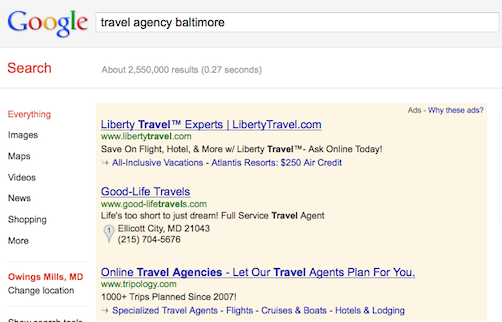
- Local intent: “travel agency in Baltimore” or “travel agent near me”. These longer, more specific searches cost less and convert better because the searcher already wants what you offer.
- Expertise searches: questions about visas, itineraries or when to book, answered with helpful guides on your site.
Make every click count
Ads only pay off if the page they lead to does its job. Send each campaign to a page that matches the search, show real trips and real reviews, make it easy to call or request a quote on a phone, and track those calls and form submissions as conversions so you know which keywords actually produce bookings.
Five website basics that win bookings
- Keep it simple. Organize the site by destination and trip type, and give travelers a quick way to filter down to the trips that fit.
- Lead with useful content. Destination guides, sample itineraries, what is included and honest price ranges give travelers a reason to stay, and give search engines something worth ranking.
- Be open 24 hours. People plan trips at night and on weekends. Online inquiry and booking forms, a clear response time and a click-to-call or text option let them act when they are ready.
- Design for phones first. Most trip research happens on a phone, so pages need to load fast and forms need to be short.
- Show what past travelers say. Reviews, testimonials and real trip photos build the kind of trust a big booking site cannot match.
Planning a new site for your agency? Our guide to planning a new website covers the decisions to make before design starts.
Build visibility that lasts
Alongside ads, keep your Google Business Profile complete and active, ask happy travelers for reviews, and publish destination and planning content that shows your experience. That is what earns organic rankings and gives AI tools something credible to recommend.
The good news is that search still rewards specialists. An agency with a clear niche, a focused paid search campaign and a site that converts can compete for bookings with companies many times its size. Talk to us about a search plan for your agency.