
Most website emergencies we get called into could have been a fifteen-minute fix if the owner had a working backup. Not just “the host probably keeps something”, but a recent copy you know how to restore. Here are the three situations where that matters most, and what a sensible backup plan looks like today.
Scenario 1 – An update breaks something
WordPress, its plugins and your theme release updates constantly, and most of them include security fixes, so skipping them is not an option. Many hosts and plugins now apply updates automatically. That is good for security, but it also means a conflict between two plugins can take down a form, a checkout or a whole page overnight, without anyone touching the site.
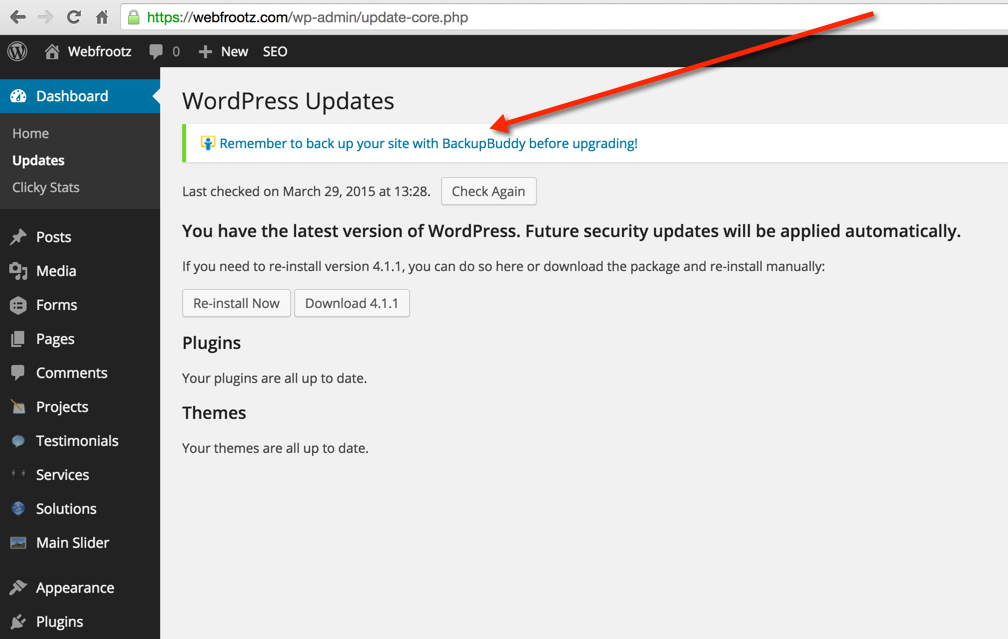
A backup taken before updates run lets you roll back to the last working version in minutes, keep the business running, and then work out the real fix calmly. Better still, test major updates on a staging copy of the site first.
Scenario 2 – A well-meant edit goes wrong
Modern page builders make it easy for your team to update content, and that is a good thing. They also make it easy to delete a section, overwrite a template or paste in code that breaks a layout. Revision history helps with single pages, but it will not undo a changed global setting or a deleted menu.
Knowing you can restore yesterday’s version takes the fear out of editing. Teams that trust their backups are more willing to keep their site fresh.
Scenario 3 – The site gets hacked
Hacks are rarely personal. Automated bots scan millions of sites every day looking for outdated plugins and weak passwords, and small business sites are easy targets. The fastest way back is to restore a clean copy from before the infection, then close the hole that let it in: update the vulnerable plugin, change passwords and turn on two-factor login.
This is also where backup age matters. If your only copy is three months old, or was quietly infected too, the restore costs you three months of changes.
What a good backup plan includes in 2026
- Automatic, frequent backups of both files and database: daily for most sites, more often for sites that take orders or bookings.
- Off-site storage, kept somewhere other than your hosting account, so a host problem or a compromised login cannot delete your backups too.
- Enough history (30 days or more) to go back past a problem you did not notice right away.
- A tested restore. A backup you have never restored is a hope, not a plan. Try it on a staging site at least once a year.
- A named owner who knows where the backups live and how to use them.
Think of backups as inexpensive insurance. If you are not sure whether your site has a backup, how often it runs or whether it would actually restore, ask your web team this week. If you do not have one, we can help you set one up.